Tuesday, June 1, 2010

Denying Death in Montana's Legislature

Here we go: Montana Republican state senator Greg Hinkle has introduced a bill that would make it illegal for a doctor to give a mentally competent, terminally ill patient a lethal prescription. The bill is a reaction to the New Year's Eve decision by the state supreme court that aid in dying is not prevented under the current state constitution. Those of us watching the state since the New Year have been noting the battle brewing there. Compassion and Choices, participants in the Baxter v. Montana case, have been running ads to make more citizens aware of the dying process and the way aid in dying works. They've rightly anticipated moves like this by legislature and "pro-life" groups to temper that ruling. Hinkle's statements in this article are, I think, very telling of the mindset he represents.

Hinkle says a family member was told he only had a short while to live. That was over 30 years ago and he's still alive with great grand kids. He thinks people could take advantage of a sad person for malicious purposes. He says "If you're in a depressed state, which some people can be, then they might say I give up instead of fighting it. Look at how many cases of people with debilitating diseases who are going to fight .

The common argument against aid in dying takes these points as evident, moral and worthy of state enforcement:

1. Doctors misdiagnose and miracles do happen (meaning God can reward us with a reprieve from a terminal illness)

2. Society, termed the "culture of death" by "pro-life" groups, is out to kill. Hinkle and others see themselves as protectors of moral and religious behavior.

3. A patient who "gives up" on life by asking for aid in dying doesn't deserve to have their suffering alleviated. In other words, those who accept that death must come are not victims of a terminal disease but victims of their own lax morals. And yet, those who request aid in dying have most often fought their disease for years - in Baxter's case it was 12 years - with a strong will to live.

4. By legislating that all patients refuse to "give up," Hinkle is arguing for futile care, that each of us deny the likelihood of death and accept the physically, emotionally and financially costly treatments that can't save life but can only prolong death, if not for themselves then for a society that works to deny death.

Labels: , , , ,

Wednesday, December 2, 2009

Suffering Is A Gift From God.

From Reflections of a Paralytic:

This is an excellent article from Steve Pokorny at Catholic Exchange. A bit of an intro:

Throughout human history, since Adam and Eve, there has been the temptation to want to take the powers of life into our own hands. There is the insidious idea that is floated through our fallible minds that if we manipulate things to our liking, then things will just go better. Or so we think.

Take the issue of euthanasia that is ramping up its exposure. From a recent Discovery Institute article entitled “Suicide Radicalism Surges in America,” we read that “Doctor” Philip Nischke of Australia “has brought his suicide seminar to California and Washington State, where he taught all comers how they can make themselves dead.” His logic (albeit misguided) leads him to “if we each own our bodies, he says, and if self-termination is an acceptable answer to human suffering, then assisted suicide shouldn’t be restricted to limited “subgroups” such as the terminally ill.”

“Dr. Phil” would be correct if our bodies were merely an instrument, something that is separate from ourselves. Yet this is the same trouble that dear fellow Descartes got himself into.

I don’t want to give too much away here – read the whole thing!


When we suffer, we work to find reasons why. Simply saying that life is suffering is not enough. The fear of death and pain demand that we find reason, justification. If we decide that we are not responsible for our lives, we can pass the responsibility to God. It's easy. He won't give you more than you can handle. You must learn from your pain. Suffering is God's punishment for your sins (as was Christ's) and your blessing.

Yet, not everyone believes this. Our society is pluralistic, of many races, genders, sexualities, income brackets, faiths, and ideas. Assigning our laws to reflect only one of these is discrimination against all others. If democracy can only exist when church and state are separate, the above advocates for a theocracy. And we all know how theocracies work out, right?

Labels: , ,

Sunday, November 22, 2009

Oh Margaret Somerville, It's Not About Your Dignity, It's About My Suffering!

For three decades women argued that abortion should be legal because a woman should have a choice over her body and reproduction. Because of this stance on abortion, the "pro-life" camp was able to steal the moral thunder of the argument.

Now we've got a culture where women are afraid to admit they've had abortions, where the church is ceded the moral high ground on the issue even through their policies subjugate women, particularly the poor. The framing of abortion has become such that Hillary Clinton has said we should work to decrease the number of abortions, missing the point that there is no moral ground for those who argue for it's illegalization.

When I hear arguments for aid in dying being based on dignity, I get a little nervous, afraid that the same framing we have seen around the abortion issue (and what has perpetually kept us on the brink of losing abortion rights) could be applied - is being applied! - to end of life rights.

In the below excerpt from an article in Canada's The Gazette, hyper-conservative bioethicist Margaret Somerville (no same-sex marriage, no reproductive rights for women, no patients' rights...) takes apart the idea of dignity in her defense of imposing religious ideology on patients.

Despite the oral arguments in the recent Baxter v. Montana case, I would say that framing aid in dying as an issue of dignity is going to get us nowhere in this global discussion. We all define dignity in very subjective ways.

What people are contesting in the fight for aid in dying is: Who Has Jurisdiction Over Suffering? Of course suffering comes in many forms. But no one but the patient can tell you what is suffering and what is not. And no one but the patient can tell you what suffering they can handle and what they can not. The problem with Somerville's argument is that she wants to defend the state's or the church's or the medical professions jurisdiction over suffering. These institutions have a vested interest in telling patients what they will and won't suffer for reasons that include: punishment, religious redemption, and professional pride and profit.

Don't miss me here, I'm talking about institutions, not individuals. If someone tells you they will decide how much you're going to suffer, no number of claims for human dignity are going to stop them. Suffering is sacred and powerful.

Let's make certain that the aid in dying movement doesn't lose site of the role suffering must play in this discussion; not just dignity, personal rights, autonomy, and choice. I would hate for those with other purposes to frame the argument in a way that sets back the movement thirty years.

Euthanasia advocates argue respect for human dignity requires that euthanasia be legalized and opponents of euthanasia argue exactly the opposite, that respect for human dignity requires it remain prohibited. In short, the concept of human dignity and what is required to respect it is at the centre of the euthanasia debate, but there is no consensus on what we mean by human dignity, its proper use, or its basis.

American political scientist Diana Schaub says "we no longer agree about the content of dignity, because we no longer share ... a 'vision of what it means to be human'." She's correct. So what are the various interpretations of dignity and what can they tell us about "what it means to be human"?

Intrinsic dignity means one has dignity simply because one is human. This is a status model - dignity comes simply with being a human being. It's an example of "recognition respect" - respect is contingent on what one is, a human being.

Extrinsic dignity means that whether one has dignity depends on the circumstances in which one finds oneself and whether others see one as having dignity. Dignity is conferred and can be taken away. Dignity depends on what one can or cannot do. Extrinsic dignity is a functional or achievement model - dignity comes with being able to perform in a certain way and not to perform in other ways. It comes with being a human doing. This is an example of "appraisal respect" - respect is contingent on what one does.

These two definitions provide very different answers as to what respect for human dignity requires in relation to disabled or dying people, and that matters in relation to euthanasia.

Under an inherent dignity approach, dying people are still human beings, therefore they have dignity. Opponents of euthanasia believe respect for human dignity requires, above all, respect for human life and that while suffering must be relieved, life must not be intentionally ended. Taking life, except where that is the only way to save life as in justified self-defence, offends human dignity. That is why capital punishment is wrong and why euthanasia is wrong.

In fact, the original primary purpose of the concept of dignity was to ensure respect for life. It's ironic that it has been turned on its head by pro-euthanasia advocates to promote exactly the opposite outcome.

Under an extrinsic dignity approach, dying people are no longer human doings - that is, they are seen as having lost their dignity - and eliminating them through euthanasia is perceived as remedying their undignified state.

Pro-euthanasia advocates argue that below a certain quality of life a person loses all dignity. They believe that respect for dignity requires the absence of suffering, whether from disability or terminal illness, and, as well, respect for autonomy and self-determination. Consequently, they argue that respect for the dignity of suffering people who request euthanasia requires it to be an option.

Labels: , , , ,

Tuesday, November 3, 2009

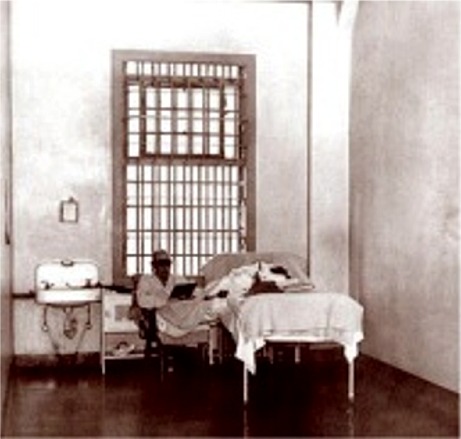
Redemptive Suffering: Pain, Prison, and Assisted Suicide.


Garrett Keizer wrote in a 2005 essay for Harpers on physician assisted suicide titled, "Life Everlasting: The religious right and the right to die," that those who oppose aid in dying in the US are "protecting pain."

The first reason he notes for why opponents fight to protect pain is religious; the church deems suffering and pain to be redemptive.

The second reason, which can always be counted on to exploit the first, is political: the belief that pain is fundamental to justice, which makes perfect sense if justice is conceived as nothing more than a system of punishments and rewards. The essence of punishment is pain. Whoever owns pain owns power.

It's a chilling assessment (and essay) that I return to again and again as I think through and write about the aid in dying movement.

I wrote about a month ago regarding the pending Baxter v Montana appeal case before that state's supreme court which, if upheld, will determine aid in dying constitution in Montana:

But this isn’t a case about who’s responsible for ending a life. All patients who seek a death with dignity have already been meted out a sentence of death, either by cancer, multiple sclerosis, or some other painful, debilitating disease. Who ends a life that is already ended is not what advocates on both sides are contesting. The heart of Baxter v Montana – and the assisted suicide movement in the US – is really: Who has jurisdiction over suffering?


There are at least four bodies within society that have historically laid claim to the realm of suffering, either directly or indirectly: the state; the medical profession; God (or the church); and the individual patient.


From ReligionDispatches today comes an interview with Caleb Smith, the author of the new book, The Prison and the American Imagination, that, when viewed through the lens of the aid in dying movement, sheds much new and needed light on religion, suffering and redemption. In it Smith states:


The reformers who built the model institutions of the early nineteenth century called them penitentiaries, to compel penitence. They drew from Christian traditions—Quaker tenets of nonviolence, Catholic and Calvinist varieties of asceticism and moral rigor—and they often represented the cell as a place of spiritual rebirth. As a precondition for that resurrection, they led convicts through mortifying processes including “civil death,” a loss of legal personhood with origins in European monasticism. The Philadelphia reformer Benjamin Rush quoted scripture in describing the rehabilitated convict as a man who “was lost and is found—was dead and is alive.” My book is animated by my fascination with this resurrection plot and all of its contradictions.


Can hospitalization be considered a form of incarceratin? Smith reminds us of the interwoven nature in Western society of state power and church theology.


Ideas of salvation and redemption not only govern how we treat those who have offended society in criminal ways, but of those who, as Susan Sontag might put it, offend society by contracting terminal illnesses.


Labels: , , , ,

Wednesday, October 7, 2009

Self-Indulgent Suffering and Attitudes Toward Assisted Suicide in Britain.

Clare Allen, who writes on mental health, has an article in today's Guardian about recent events in the assisted suicide movement in Britain, namely the court case won by Debbie Purdy and subsequent updates to the prosecutorial guidelines on assisted suicide:

While it strikes me that the choice of a rational adult to end their life must be theirs by right, and that the threat of prosecution for people who assist those who cannot act alone contravenes that right, the consequences of changing the law are potentially devastating, not only for those with mental health problems but for the mental health of society as a whole.

This is not an easy subject to discuss. It's a topic about which people feel strongly, and understandably so. Moreover, there is sometimes a sense that if you aren't suffering from a terminal illness, or caring for someone with terminal illness, or profoundly disabled, then you have no right to express a view at all. But the law on assisted suicide, and indeed on euthanasia, has the greatest possible impact on our attitude towards life itself, and no one is exempt from its implications. It is crucial that the psychological signal of any proposal to change the law be properly evaluated.

Regarding societal attitudes toward pain and suffering:

If we legalise euthanasia, we inevitably shift our attitude towards suffering. There's a sense in which pain becomes self-imposed, and even self-indulgent. Not only does this have profound implications for our willingness to fund palliative care and to provide for people who are disabled, but also for our perception of difference in general.


Labels: , ,