Friday, June 17, 2011

BBC's Pro-Death Propaganda

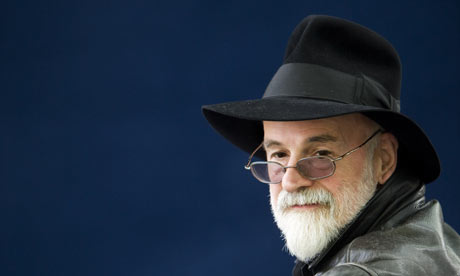
A BBC special by the renowned British author Terry Pratchett has caused a stir in the UK. Shown Monday night, "Terry Pratchett: Choosing to Die," included footage of a patient ingesting lethal medication and dying in a Dignitas clinic in Switzerland, where aid in dying is legal. Nearly 900 viewers contacted BBC to complain. The show caused a furor that reached the state level; several peers are accusing the station of taking a side in the aid in dying debate, one of the more contentious issues in Britain at the moment. Aid in dying is not legal in the UK. Terry Pratchett, diagnosed with Alzheimer's, is a vocal advocate for the right to die.

Last year Kier Starmer, the Director of Public Prosecutions, ruled that it was legal to assist a patient in their death, a decision that was the result of a court case brought by multiple sclerosis sufferer, Debbie Purdy, in 2009. Purdy asked the courts to allow her partner Omar Puente to assist her travel to Switzerland when she decided to end her life -- without risking court action when he returned.

(h/t Mrak)

Labels: , , , , , ,

Monday, November 29, 2010

Aiding Assisted Suicide in Britain, Reviewing the Laws

Meanwhile (see prior post), Britain has created a committee that will review their laws regarding family members and friends who help loved ones travel outside the country for assisted suicide.

The move follows a number of cases in which British people have travelled with friends or family to the Dignitas clinic in Switzerland, where terminally ill people are able to end their lives. Although police investigated the cases, none were taken to court. Last year, Debbie Purdy, who suffers from multiple sclerosis, won an historic judgment in the House of Lords that said she had a human right to know if her husband would face prosecution in such circumstances.

Falconer told the Observer: "It is probably a criminal offence to travel with someone to Switzerland to help them to die and yet it is so obvious that nobody on any side of the argument has the stomach to prosecute people like, for example, Dan James's parents." He was referring to the case of the 23-year-old whose parents helped him commit suicide after he was paralysed in a rugby accident.


Christian groups have already accused the commission of being biased.


Labels: , ,

Saturday, July 10, 2010

Dying at Home in the UK

Britain's Health Secretary, Andrew Lansley, has announced that more people should be allowed to die at home, a phrasing that gets at the challenges of end of life care, from The Telegraph:

Speaking at the International Carers Conference in Leeds, he said: “Having a terminal illness is a very distressing time for individuals and their families. People should be able to choose where they are cared for – most would choose to be cared for at home, surrounded by their friends and family – and be certain that the care they receive will be of the highest quality.

“This review will look at how we better deploy the money we spend on palliative care – so those in need are better supported. We intend that whatever care patients choose will meet their needs and wishes.”


In the U.S., as I've written before, about 80% wish to die at home but only about 20% do. I've been interested to see how attention to end of life care changes when the issue of assisted suicide (in all it's nomenclature) is discussed. Britain has been in the midst of a public discussion of end of life care, assisted suicide and the legal challenges of such laws thanks to the Purdy case last summer. I wonder if this elevated level of awareness there has had any effect on Lansley and the proposed study?

Labels: , , ,

Tuesday, June 1, 2010

Unnecessarily Burdensome.

I've been pointing to Thaddeus Pope a lot lately and for good reason; he's keeping us apprised of cases around the world that address futile care, and in a way that is provocative and not monolithic. That's refreshing when so often commentary regarding health care comes as announcements, not invitations to think. Take for instance the last paragraph in this quote from Pope's site of an article in the Yorkshire Post. Pope highlights the interesting bits that work to change the way we look at patient choice as limited only to effective care - that's a huge paradigm change from the rampant demand for treatments until the last days of life, regardless of their efficacy (see Montana Republican state senator Greg Hinkle in my prior post.)

Barbara Evans' daughter was "shocked" to discover that a DNR order had been written on her mother's medical notes. She explained, "I was shocked because this issue had never been discussed with either my mother or the family." (Yorkshire Post, June 1, 2010)

A Leeds Teaching Hospitals NHS Trust spokesman said:
The trust policy states explicitly that in most cases patients should be informed of any clinical decision not to attempt resuscitation. We do discuss cardiopulmonary resuscitation (CPR) decisions with patients and/or their relatives where we feel there is a genuine choice to be made – that is when we think that it could be successful, but even then the patient may not want CPR to be attempted. Our policy emphasises that, where there is a real, and difficult choice to be made, the patient's view is of paramount importance.
The spokesman further explained:
However we may feel that to attempt CPR would be medically futile, and that there is no real decision for the patient or their relatives to make. Even then, we now recommend that most patients should be told, as part of the process of keeping them informed about the seriousness of their condition. For some patients, for example those who know that they are approaching the end of their life, information about interventions that would not be clinically successful would be unnecessarily burdensome and of little or no value. Such patients could be distressed by receiving what could appear to be unnecessary and unhelpful information, in the same way that we would not talk about an operation or other treatment that would not help them.

Labels: , ,

Sunday, April 25, 2010

British Doctor First to be Charged Under New Assisted Suicide Guidelines

An excerpt from the article in the Telegraph:

Dr Irwin has written a letter to Keir Starmer QC, the Director of Public Prosecutions (DPP), effectively inviting criminal charges within weeks, for which the former GP could be jailed for up to 14 years.

Dr Irwin, who admits he had accompanied two other previous strangers to the Dignitas clinic to help them take their own lives, wants to make a test case out of his assistance in helping Raymond Cutkelvin to commit suicide three years ago.

Mr Cutkelvin, 58, a post office clerk from north London who was suffering from advanced pancreatic cancer, chose to die in the "suicide clinic" in February 2007.

Mr Cutkelvin is one of some 140 terminally-ill Britons who have died with the help of Dignitas, which was founded in 1998. In Switzerland, "suicide clinics" are legal despite widespread criticism internationally and internally.

Just two months ago, Mr Starmer clarified the Suicide Act of 1961 which makes it an offence to assist a suicide. He published six "public interest factors against prosecution" and 16 "public interest factors in favour of prosecution".

Labels: , , , ,

Friday, April 9, 2010

British Nurses Report on Advanced Care Planning (ACP)

The entire article, below, on a new survey done in Britain of nurses regarding advanced care planning:

Advance care planning (ACP) is a process of discussion about goals of care and a means of setting on record preferences for care of patients who may lose capacity or communication ability in the future. Implementation of ACP is widely promoted by policy makers.

This study examined how community palliative care nurses in England understand ACP and their roles within ACP. It sought to identify factors surrounding community nurses'implementation of ACP and nurses'educational needs.

Methods: An action research strategy was employed.

23 community nurses from two cancer networks in England were recruited to 6 focus group discussions and three follow up workshops. Data were analysed using a constant comparison approach.FindingsNurses understood ACP to be an important part of practice and to have the potential to be a celebration of good nursing care.

Nurses saw their roles in ACP as engaging with patients to elicit care preferences, facilitate family communication and enable a shift of care focus towards palliative care. They perceived challenges to ACP including: timing, how to effect team working in ACP, the policy focus on instructional directives which related poorly to patients'concerns; managing differences in patients'and families'views.

Perceived barriers included: lack of resources to; lack of public awareness about ACP; difficulties in talking about death. Nurses recommended the following to be included in education programmes: design of realistic scenarios; design of a flow chart; practical advice about communication and documentation; insights into the need for clinical supervision for ACP practice.

Conclusions: Nurses working in the community are centrally involved with patients with palliative care needs who may wish to set on record their views about future care and treatment.

This study reveals some important areas for practice and educational development to enhance nurses'use and understanding of ACP.

Author: Jane SeymourKathryn AlmackSheila Kennedy
Credits/Source: BMC Palliative Care 2010, 9:4

Labels: , , ,

Monday, March 29, 2010

Interview with Debbie Purdy.

Scotland on Sunday has a lengthy profile/interview with Debbie Purdy, the British MS sufferer who won a case last summer that allows her husband Omar to travel to Switzerland with her - and not face prosecution - should she choose to end her life. Here's a clip from the article:

It's the irony of Purdy. The multiple sclerosis sufferer is associated with the right to die campaign but displays a vitality that epitomises the best of living. Last year, she successfully challenged the 1961 law on assisted suicide in the House of Lords. The Scottish Parliament is currently considering a bill to legalise assisted suicide but such moves have been resisted in England. Attempting suicide is not illegal, but helping someone to take their own life is. A blind eye has often been turned to those assisting the terminally ill, but Purdy wanted concrete clarification. Her victory resulted in the director of public prosecutions in England and Wales laying out the conditions under which prosecution would and would not be likely to happen. In Scotland the Lord Advocate has declined to do the same.

The new guidelines make Purdy confident that her husband, musician Omar Puente, would not be prosecuted if he helped her travel to the Dignitas clinic in Switzerland, where patients are helped to die. MS is not terminal, but it is progressively debilitating. Purdy had argued that, without legal clarification, she would have to terminate her life prematurely when she could still travel unaided.

More than 100 people have travelled to Dignitas from Britain without any prosecutions. So was this part of the intellectual argument – and a bit of emotional blackmail – rather than the reality of Purdy's situation? Absolutely not, she insists. There is no guarantee about prosecution. The only person ever charged, though the case was dropped, had a Polish surname. "That was a worry." Puente is not white and middle-class. He's black and Cuban. "In 2008 I joined Dignitas because I was losing the ability to travel by myself, and that was terrifying. If we hadn't won in the House of Lords, I'm not sure I would have got to the European Court, which would have been the next stage, because I probably would have gone to Dignitas. I thought I was losing physical ability more quickly than has actually been the case. And that would have been a terrible mistake."

Purdy has become synonymous with an issue. We know what she stands for but not who she is. Now, she has written a book, It's Not Because I Want to Die. The title sums her up. "I don't think anyone should be in favour of assisted dying. But neither should they be against it. It's not the right choice for everybody, but it should be a choice to explore." It's an important distinction. To understand Purdy's attitude to dying, you first have to grasp her attitude to living.

Labels: , , , , ,

Thursday, March 25, 2010

Britain's Pharmacists and the Conscience Clause.

From the BBC, Britain has decided to keep the same provider refusal laws that exist in the US. Pharmacists who morally object to contraception will be able to legally refuse those services. But discussion in Britain is now taking place that will require refusing pharmacists refer patients to other pharmacies or facilities where they can get the prescription their doctor has given them.

Here in the US, the same question looms over pharmacists. Obama rescinded the 11th hour conscience clause made law by Bush in his last month of the presidency. Obama has yet to take up the issue again, despite strong calls for it's inclusion in the health care bill. Here in the US, the argument continues to be framed as one of provider conscience; the rights of patients seldom make it into the discussion, unfortunately. I hope this conversation does take place in the US; patients' rights need to be considered, explained, and debated on a national scale.

From the article:

A revised code of conduct from the new industry regulator will allow staff to opt out of providing items such as the morning-after pill and contraception.

But they may in future have to give customers details of alternative shops.

The National Secular Society wanted the General Pharmaceutical Council to scrap the so-called conscience clause.

The General Pharmaceutical Council (GPhC) is to take over the regulation of pharmacists, pharmacy technicians and the registration of pharmacy premises from the Royal Pharmaceutical Society later this year.

Under its new code, pharmacists with strong religious principles will still be able to continue to refuse to sell or prescribe products if they feel that doing so would contradict their beliefs.

But the GPhC says pharmacists who refuse services could be obliged to tell patients where they can access them and it plans to consult more widely on the issue.

Terry Sanderson, president of the National Secular Society, said he was disappointed by the code.

"This was a perfect opportunity to severely restrict the exercise of this supposed conscience clause which has caused a great deal of embarrassment and inconvenience to people recently.

Labels: , , , , ,

Thursday, February 25, 2010

Britain's Ed Balls Tackles Sex Education with New Bill.

A new British bill, introduced by Ed Balls and being lashed by every conservative organization in the country, would tackled discrimination and issues of informed consent in religious schools, making illegal the instruction of only religious ideology.

John Smeaton of the hyper-conservative Society for the Protection of Unborn Children about loses it on the bill:

Mr Balls's statements today not only confirm, but add further truth to the warnings that SPUC has been issuing for months about the government's plans - and the English and Welsh Catholic bishops'complicity in those plans. Please make sure that you have read andacted upon SPUC's latest campaign alert on the Commons debate later today.

(P.S. The reason why the Catholic Church's teaching on homosexuality is so important for the pro-life cause can be found in Pope John Paul II's
Evangelium Vitae. In paragraph 97, Pope John Paul teaches that it is an illusion to think that we can build a true culture of human life if we do not offer adolescents and young adults an authentic education in sexuality, and in love, and the whole of life according to their true meaning and in their close interconnection.)

Yup, the end of the world as we know it comes just after children are exposed to fags!

Here's what Today reported Balls saying the bill would do:

  • "If you are currently a Catholic school ... you could choose to teach only to children that contraception is wrong, homosexuality is wrong. That changes radically with this bill." (at 06:30 mins)
  • "A Catholic faith school can say to their pupils we believe as a religion contraception is wrong but what they can't do is therefore say that they are not going to teach them about contraception to children, how to access contraception, or how to use contraception. What this changes is that for the first time these schools cannot just ignore these issues or teach only one side of the argument. They also have to teach that there are different views on homosexuality. They cannot teach homophobia. They must explain civil partnership. They must give a balanced view on abortion, they must give both sides of the argument, they must explain how to access an abortion, the same is true on contraception as well." (from 07:20 to 08:47 mins)
  • "To have the support of the Catholic Church andArchbishop Nichols in these changes is, I think, very, very important, is a huge step forward." (at 09:05 mins)
  • "[Catholic schools] cannot teach that homosexuality is wrong and that therefore it is OK to discriminate on homosexuality" (at 10:42 mins)
  • "[T]he Catholic Church, which I really welcome, is supporting, for the first time, compulsory sex education with an opt out at 15" (at 12:25 mins) (JS: Mr Balls knows that the opt-out i.e. parental right to withdraw children from SRE classes, ends at 15, not starts. Also, what is unappreciated is that no child of any age will be able to withdraw themselves from SRE.)
But now Balls is lightening up on the strictures for religious schools - in Britain 1 in 3 - an issue that has worried those who praised the enlightened nature of the initial bill.


Extra credit: Just imagine a bill of this sort here in the U.S.?!


Labels: , ,

Britain's DPP, Kier Starmer, Publishes Assisted Suicide Guidelines.

Director of Public Prosecutions, Kier Starmer, has released his much-anticipated guidelines regarding prosecution of those who assist in the suicide of another person.

From Sky News.
From the BBC.
From Channel 4.

Labels: , ,

Tuesday, February 16, 2010

Case of Mercy Killing Hits British Media.

From my friend Graciela: a new British documentary on assisted suicide contains the admission by veteran BBC reporter Ray Gosling that many years ago, when his lover who was dying from Aids, he honored their pact by holding a pillow over the dying man's face to prevent more suffering.

Sarah Garrod reports at InTheNews:

A BBC broadcaster is being investigated by police after he confessed live on air he had smothered his lover who was dying of Aids.

Ray Gosling, 70, said he had committed the killing as a mercy act, to prevent his lover from suffering "terrible pain".

Mr Gosling made the confession on the BBC East Midlands programme Inside Out broadcast last night. It is understood the show was recorded last November, but the BBC had not notified the police.

Nottinghamshire police said: "We were not aware of Mr Gosling's comments until the BBC Inside Out programme was shown.

"We are now liaising with the BBC and will investigate the matter."

Mr Gosling said on the show: "I killed someone once. He'd been my lover and he got Aids.

"I picked up the pillow and smothered him until he was dead. No regrets."

He added that he had killed the man after doctors told him in hospital that nothing more could be done for him: "I said to the doctor: 'Leave me… just for a bit,' and he went away.

"I picked up the pillow and smothered him until he was dead. The doctor came back and I said: 'He's gone.' Nothing more was ever said.

"When you love someone, it is difficult to see them suffer. My feelings on euthanasia are like jelly - they wobble about.

"This is the time to share a secret I have kept for quite a long time."

Care Not Killing, a UK-based alliance which promotes "more and better palliative care" and aims to ensure "that existing laws against euthanasia and assisted suicide are not weakened or repealed during the lifetime of the current Parliament", said following the broadcast of the show: "It is impossible for any outsider to establish the facts in this case objectively as all we have currently is Mr Gosling's confession.

"The police will need to investigate the case thoroughly in order to establish the facts and then it will be up to the Director of Public Prosecutions (DPP) to decide whether to bring a prosecution. If the DPP proceeds it will then be a matter for the courts. A key difficulty faced by all those involved will be that the key witness, the deceased, will be unable to give any account about what actually happened.

Labels: , , , ,

Wednesday, February 3, 2010

The Death Cat: Predicting The End.

From the Globe and Mail:

“A cat with an uncanny ability to detect when nursing home patients are about to die has proven itself in around 50 cases by curling up with them in their final hours, according to a new book,” The Daily Telegraph reports. “Dr. David Dosa, a geriatrician and assistant professor at Brown University, said that five years of records showed Oscar rarely erring, sometimes proving medical staff at the New England nursing home wrong in their predictions over which patients were close to death.” Oscar, now five and generally unsociable, was adopted as a kitten. The cat spends its days pacing from room to room, rarely spending any time with patients except those with just hours to live. If kept outside the room of a dying patient, Oscar will scratch on the door trying to get in. In his book, Making Rounds with Oscar: The Extraordinary Gift of an Ordinary Cat, Dr. Dosa suggests Oscar is able – like dogs, which can reportedly smell cancer – to detect ketones, the distinctly odoured biochemicals given off by dying cells.

Labels: , ,

Rebutting Pratchett's Reasonableness.

Changing the law would enshrine the idea that we can and should choose the time and place and manner of our death. Death would come under our control. Inevitably, we would use that new power in such a way as to avoid the pain and suffering which dying often entails; and we would soon be persuaded that it was a generous thing to do, because it would free up NHS budgets.

And this new cultural norm would gradually dispense with the whole object of dying, which is precisely that it is out of our control. Those who accompany the dying – as I did recently, at the bedside of my father – know that it is an incredibly profound process, the crystallisation of human life and meaning.

snip

A good death is only one kind of death: it's when God – or Nature, if you don't believe – remains in charge of the moment, and a person surrenders to that invitation, hopefully borne lovingly by family and carers, after a gruelling journey of renunciation. That's why killing – whether in war, murder, suicide, or assisted death – can never result in a good death. God doesn't kill.

And that's why the chilly reasonableness of a planned death must never be allowed in law. Precisely because it is reasonable to jump to avoid the gruelling business of dying, a good death would soon be seen as unreasonable – and services and budgets adjusted accordingly. It is an appalling prospect.


From Austen Ivereigh in today's Guardian.

Labels: , , ,

Writer Terry Pratchett Calls for Legalization of Aid in Dying in Britain.


As Britain has struggled with the legalization of aid in dying since the summer's decision in the Debbie Purdy case, numerous notables have weighed in on subject, most recently Martin Amis. Another writer jumps in, Sir Terry Pratchett, who was diagnosed with Alzheimers two years ago. He's written an article for the Guardian that lays out his stance and challenges some of the current oppositional arguments against aid in dying.

On Suicide:

As a pallid and nervous young journalist, I got to know about suicide. It was part of my regular tasks to sit in at the coroner's court, where I learned the manifold ways the disturbed human brain can devise to die. Coroners never used the word "insanity". They preferred the more compassionate verdict that the subject had "taken his life while the balance of his mind was disturbed". There was ambivalence to the phrase, a suggestion of the winds of fate and overwhelming circumstance. In fact, by now, I have reached the conclusion that a person may make a decision to die because the balance of their mind is level, realistic, pragmatic, stoic and sharp.

And that is why I dislike the term "assisted suicide" applied to the carefully thought-out and weighed-up process of having one's life ended by gentle medical means.

The people who thus far have made the harrowing trip to Dignitas in Switzerland to die seemed to me to be very firm and methodical of purpose, with a clear prima-face case for wanting their death to be on their own terms. In short, their mind may well be in better balance than the world around them.

On Giving Up:

And so I have vowed that rather than let Alzheimer's take me, I would take it. I would live my life as ever to the full and die, before the disease mounted its last attack, in my own home, in a chair on the lawn, with a brandy in my hand to wash down whatever modern version of the Brompton Cocktail some helpful medic could supply. And with Thomas Tallis on my iPod, I would shake hands with Death.

This seems to me quite a reasonable and sensible decision for someone with a serious, incurable and debilitating disease to elect for a medically assisted death by appointment.

On Coercion:

The Care not Killing Alliance assures us that no one need consider a voluntary death of any sort since care is always available. This is questionable. Medicine is keeping more and more people alive, all requiring more and more care. Alzheimer's and other dementias place a huge care burden on the country. A burden that falls initially on the next of kin who may even be elderly and, indeed, be in need of some sort of care themselves.

A major objection frequently flourished by opponents of "assisted dying" is that elderly people might be illegally persuaded into "asking" for assisted death. Could be, but the Journal of Medical Ethics reported in 2007 that there was no evidence of the abuse of vulnerable patients inOregon where assisted dying is currently legal. I don't see why things should be any different here.

On Proper Regulation:

That's why I and others have suggested some kind of strictly non-aggressive tribunal that would establish the facts of the case well before the assisted death takes place. The members of the tribunal would be acting for the good of society, as well as that of applicants, to ensure they are of sound and informed mind, firm in their purpose, suffering from a life-threatening and incurable disease and not under the influence of a third party. I would suggest there should be a lawyer, one with expertise in dynastic family affairs who has become good at recognising whether there is outside pressure. And a medical practitioner experienced in dealing with the complexities of serious long-term illnesses.

I would also suggest that all those on the tribunal are over 45, by which time they may have acquired the gift of wisdom, because wisdom and compassion should in this tribunal stand side-by-side with the law. The tribunal would also have to be a check on those seeking death for reasons that reasonable people may consider trivial or transient distress. If we are to live in a world where a socially acceptable "early death" can be allowed, it must be allowed as a result of careful consideration.


Labels: , ,

Saturday, January 30, 2010

British Nurses Tackle End of Life Care.

At Nursing Times, Joan Morgan reports on a new study designed to improve end of life care in Britain, based on the Liverpool Care Pathway.


Being responsible for planning and implementing change in practice/behaviour involves bringing about a major cultural shift. As end of life care in critical care is possibly more varied and complex than other areas of the hospital, this will take time, from both a personal and professional perspective.

It is imperative to have a thorough understanding of the legal and ethical issues involved. In the UK, the legal practice of withholding and withdrawing treatment is determined by doctors, although usually carried out after a consensual decision making process involving other professionals and family members. Moreover, we now live and work in a multicultural and ethnically diverse society, which requires greater understanding and sensitivity.

It was therefore necessary to conduct a literature review to understand current practice surrounding end of life care in critical care. This review reinforced the notion that deep seated beliefs affect care of dying people (Morgan, 2008).


Labels: ,

Monday, January 25, 2010

British Mom Found Not Guilty of Assisting Daughter's Suicide.

Today Bridget Kathleen Gilderdale of Britain was declared not guilty in the suicide of her ill daughter.

If you want to hear a story that makes you question all the religiously-inflected laws in this country, all the ideas of the "culture of death," all the supposed humanity behind the pro-life activism we saw this week during the March for Life on DC - with it's images of surgeries and fetus-shaped potatoes and euphemisms for vulnerability, murder, martyrdom, compassion and liberty, with it's work to enforce laws that decide when your life begins and ends and when you have children, that invades your examination room privacy, that defines women by their fertility and refuses to trust their judgement, that imposes religious doctrine via law and calls it "traditional values," that works to define Terri Schiavo as severely disabled, her husband "estranged," her life and yours in their hands: read this:

After the jury had delivered its verdict, Mr Justice Bean said: "I do not normally comment on the verdicts of juries but in this case their decision, if I may say so, shows common sense, decency and humanity which makes jury trials so important in a case of this kind.

"There is no dispute that you were a caring and loving mother and that you considered that you were acting in the best interests of your daughter."

Earlier prosecutor Sally Howes was asked by Mr Justice Bean "why it was considered to be in the public interest" to pursue Gilderdale on the attempted murder charge when she had pleaded guilty to aiding and abetting suicide.

ANALYSIS
Ben Ando, BBC crime reporter

A slight figure with auburn, medium-length hair, spectacles and in plain, dark clothing, there was nothing remarkable about middle-aged divorcee Bridget Kathleen Gilderdale until she took her place in the dock in Lewes Crown Court.

Gilderdale, who is known as Kay, had listened intently to the legal argument and evidence during the 10 days of her trial though, as is her right, she had declined to enter the witness box herself and give evidence in her own defence.

After hearing both prosecution and defence agree that she was a devoted, loving mother who had shown unstinting care for her daughter over 17 years, the jury was quick to return a verdict of not guilty of attempted murder.

Another count, of aiding and abetting suicide, had been admitted by Gilderdale and for this she received a 12-month conditional discharge, among the most lenient sentences the judge could impose.

Ms Howes said the prosecution decided at "the highest level" to try Gilderdale after she told her GP and police she had given her daughter an air embolism with the intent to end her life.

Because a post-mortem examination found that Miss Gilderdale had died of a morphine overdose, her mother was not charged with murder but with attempted murder.

Following the trial Gilderdale's son, Steve, read out a statement on the steps of the court flanked by his mother and father, which praised the verdict.

He said: "We believe this not guilty verdict properly reflects the selfless actions my mother took on finding that Lynn had decided to take her own life, to make her daughter's final moments as peaceful and painless as possible.

"These actions exhibit the same qualities of dedication, love and care that mum demonstrated throughout the 17 years of Lynn's illness.

"I'm very proud of her and I hope she will be afforded the peace that she deserves to rebuild her life and finally grieve for the death of her daughter."

Jurors were told that after Miss Gilderdale made a failed suicide bid her mother crushed up pills with a pestle and mortar and fed them to her through her nasal tube, handed her morphine and injected three syringes of air into her vein.

Lynn Gilderdale
Lynn Gilderdale developed ME at the age of 14

The court was told the 55-year-old tried to stop her daughter ending her life but backed down after she told her: "I want the pain to go."

More from the Telegraph. And from the Guardian.

Labels: , , , ,

Friday, January 22, 2010

Frenzy of Compassion: Medea and Britain's Mom Mercy Killers.

From bioedge.org, a summary of the two mercy killing cases in Britain.

Two mothers who have taken the lives of their severely disabled children are in this article oddly summarized as "separated from their husbands, with whom they were still on good terms, but they made the decision alone after working themselves into a frenzy of compassion."

I wonder if the implication of the last phrase is something like that common female derangement, hysteria? Why else would someone choose death if not crazy? Why else would one consider the "murder" of their loved one if not in a frenzy? I doubt "frenzy of compassion" and the marital status of the women would be so blatantly framed as "causes" of the deaths had the actors been men.

The article seems to reach to that other ancient "mercy killing" mother archetype, Medea, who killed her two beloved children to get back at Jason, her philandering husband, to save them from a life of shame and debasement. Like Medea they are described as in a frenzy, like Medea they look to that modern oracle, the internet, for answers, and like Media they are bound for banishment from society.

Here's the rest of the article, by Michael Cook:


Mrs Francis InglisAssisted suicide is never long out of the headlines in England, it seems. This week they featured two devoted mothers who killed their disabled children. In the first case, 57-year-old Frances Inglis was sentenced to life imprisonment for giving her brain-damaged 22-year-old son Thomas a lethal dose of heroin in November 2008. She will have to serve a minimum sentence of 9 years.

In 2007 Thomas was injured in a brawl and taken unwillingly to a hospital by ambulance. He jumped out while it was moving and ended up with severe brain damage. She believed that since then he had been living a life of "horror, pain and tragedy'' and she was determined to bring it to an end. In September 2007 she injected her son with heroin, but he was resuscitated. She denied her involvement after she was arrested. While on bail for attempted murder, she obtained 10 packets of heroin for £200, and injected him again.

Mrs Inglish told the court that she had no choice: "The definition of murder is to take someone's life with malice in your heart. I did it with love in my heart for Tom, so I don't see it as murder. I knew what I was doing was against the law." However, prosecuting lawyer Miranda Moore said in her closing statement: "It is a tragic case but it is not a defence to murder to end someone's life to put them out of their misery.''

In a similar case which is still being tried, 55-year-old Kay Gilderdale gave her 31-year-old daughter sleeping pills, anti-depresssants and morphine to help her to commit suicide. Her daughter Lynn had been mute and bed-ridden since she was 14 after contracting myalgic encephalomyelitis.

The two stories have common features. Both women were separated from their husbands, with whom they were still on good terms, but they made the decision alone after working themselves into a frenzy of compassion. And both relied upon the internet for finding information about their children's condition and how to kill them. Mrs Gilderdale was reading about euthanasia campaigner Dr Philip Nitschke as her daughter was dying. -- London Telegraph, Jan 20; BBC, Jan 20


Labels: ,